THE  MUSEUM WILL REOPEN THURSDAY, JAN 29 FROM 10AM TO 4PM.

Collections

steyr_puch_haflinger_1968_web01.jpg

Steyr Puch Haflinger- 1968

The history of Steyr dates back to 1820 and the manufacturing of sporting and military rifles. Hence, the concentric circle of the Steyr badge represents a target. The terms of the Versailles Treaty after WWI took away all of Steyr’s business except for bicycles. They soon decided to enter the car business. Their first car […]

Steyr Puch Haflinger- 1968 Read More »
steyr_puch_pinzgauer_1974_web01.jpg

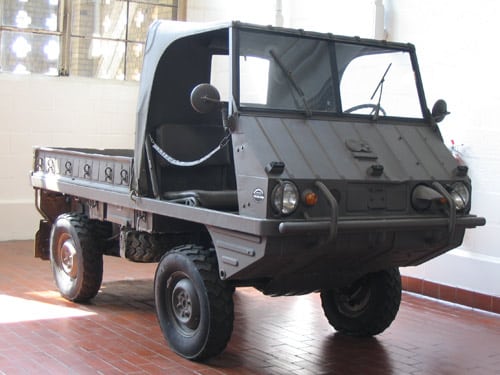
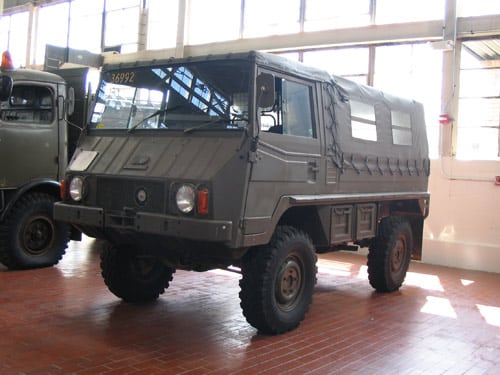
Steyr Puch Pinzgauer- 1974

The Haflinger was replaced by the larger Pinzgauer. It came in 6×6 or 4×4 forms–which you see here. The ground clearance is 13 inches when loaded. It will carry ten soldiers or the rear seats fold down flat for cargo. The cloth top, roll bars, and stays remove quickly to turn the vehicle into a

Steyr Puch Pinzgauer- 1974 Read More »

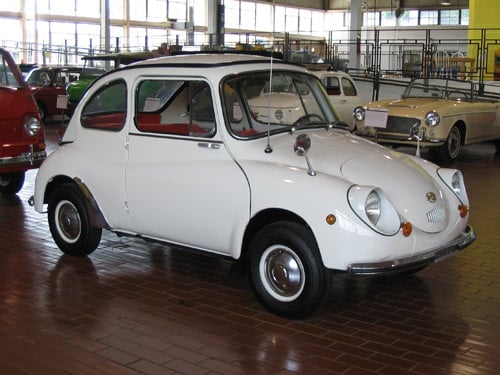
subaru_360_sedan_19704_web01.jpg

Subaru 360 Sedan- 1970

Fuji, one of Japan’s industrial giants, began to make Rabbit motor scooters in 1956. (Be sure to look for one in the motorcycle wing.) Two years later they launched their first car–the Subaru 360. While the 360 sold well in its home country, it was not so well received abroad. This car was imported into

Subaru 360 Sedan- 1970 Read More »

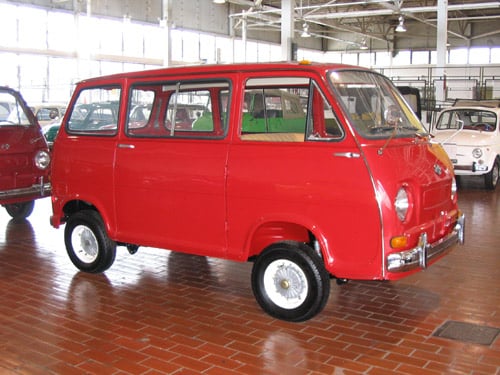
subaru_360_van_1966_web01.jpg

Subaru 360 Van- 1970

The name “Subaru” is Japanese for the Pleiades which are the six stars in the Taurus constellation. The six stars of the Subaru logo represent the six companies which make up Fuji Industries. The Subaru van has the same chassis and engine as the Subaru 360 sedan. This vehicle is a true “mini” van. The

Subaru 360 Van- 1970 Read More »

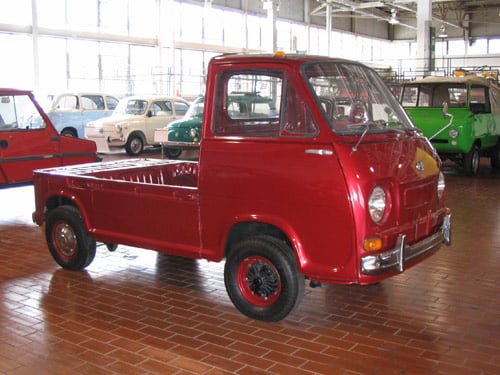
subaru_sambar_pickup_1970_web01.jpg

Subaru Sambar Pickup- 1970

In 1966, Subaru introduced Japan’s first kei-class truck, a variation of the second generation Sambar Van. The two passenger truck came equipped with a low truck deck (just under 14 inches off the ground) and approx. 38 sq. foot bed. Detachable side gates allow easier loading/ unloading and foldable flaps on three sides aid in

Subaru Sambar Pickup- 1970 Read More »

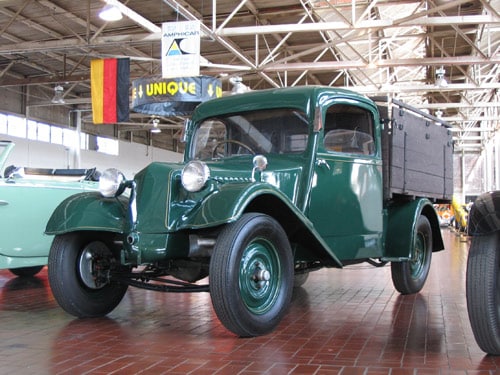
tatra_t-12_pick_up_1927_web02.jpg

Tatra T12 Truck- 1927

Hans Ledwinka was one of the most original and logical thinkers ever to work in the motor industry. He believed the automobile was destined to become an object of everyday use to modern man. His creations in such varied areas as engine design, frame and structures, suspension systems, and aerodynamics attracted worldwide attention. He created

Tatra T12 Truck- 1927 Read More »

tatra_t-57b_white_1938_web02.jpg

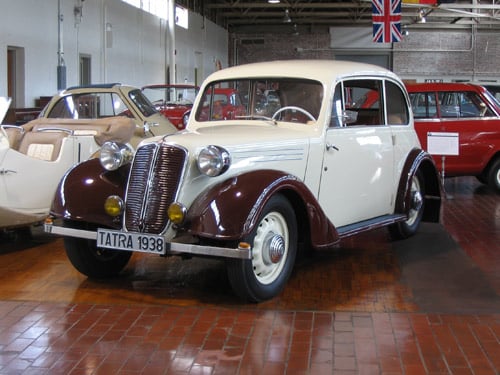
Tatra T57b- 1938

In 1931, Tatra introduced the T57 model, with air-cooled, 4 cylinder, overhead valve engines placed in the front. The T57 was one of Tatra’s most popular models and remained in production until after World War II. The example shown here is a T57b. It was produced in various body styles. The T57 was nicknamed “Hadimrška”

Tatra T57b- 1938 Read More »

tatra_t97_1938web1.jpg

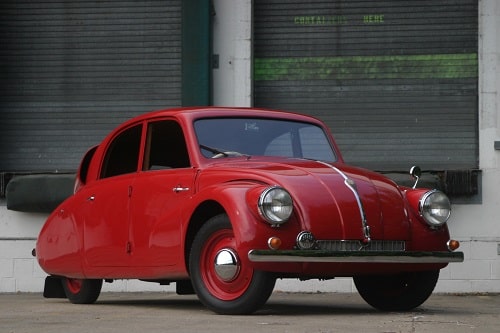
Tatra T97- 1938

Design of the T97 was finalized by Erich Ledwinka, one of Hans Ledwinka’s sons, and was developed alongside the T87. It was in effect a slightly scaled down version of the T87 and was almost identical in style. The most obvious styling difference between the two models is the lack of the sixth window on

Tatra T97- 1938 Read More »

tatra_t-613_1978_web01.jpg

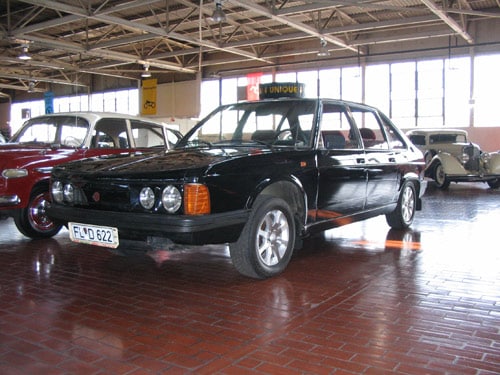
Tatra T613- 1978

In the late 1960s, it became time to start work on the design of a new Tatra to take over the role of flagship for the Communist officials. The new model – the T613 you see here, was the first Tatra styled outside the Tatra factory. Vignale of Italy did the body styling. The T613

Tatra T613- 1978 Read More »