
Sea Lion Amphibious Prototype – 2013
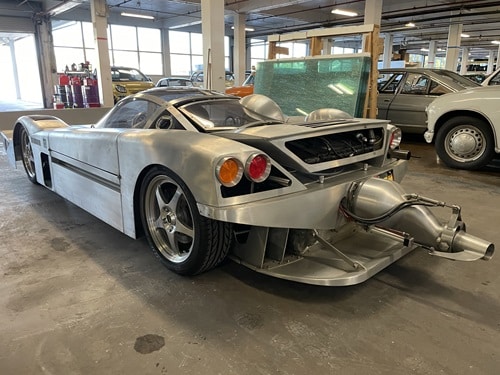
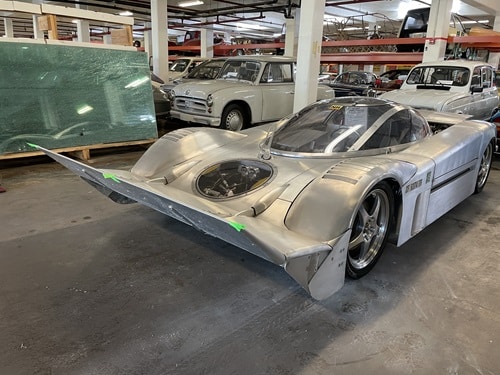
The Sea Lion is a one-of-a-kind “amphibious supercar” built in Southern California by engineer Marc Witt (operating as Marc Witt Applied Design). Built between 2006 and 2012, the vehicle was intentionally engineered to break the world speed records for amphibious vehicles on both land and water. As more of a purpose-built racing prototype than a traditional car, it was designed using CAD software and spreadsheet calculations to develop its dual-environment preformance.
The Sea Lion is powered by a 174-hp Mazda 13B rotary engine (originally from a 1974 Mazda MX-3). The rotary engine was selected for its high power-to-weight ratio and somewhat diminutive size. The body and chassis are constructed of a TIG-welded 5052 aluminum and stainless steel. It features a monocoque center section with removable side pods that provide both buoyancy and storage large enough to house mountain bikes on either side.
At its peak, the Sea Lion was allegedly capable for 125 mph on land and approximately 60 mph on water. Witt claimed that the chassis was designed to sustain speeds of up to 180 mph on land with a powerful engine upgrade. On water, the Sea Lion is propelled by a jet-drive system. To transition to water mode, the front “spoiler” or bow plane lowers to help the vehicle plane on the water’s surface.
Much of the Sea Lion’s fabrication took place in Witt’s shop in California, with some assistance from SeaRoader Aquatic, a customization and conversion shop specializing in aquatic vehicles, also in Southern California.
Specifications:
Manufacturer: Applied Design
Country of Origin: USA
Drivetrain Configuration: Rear-engine
Engine: Mazda 13B rotary engine; 174 hp
Transmission: 3-speed manual with reverse
Top Speed: 125 mph on land, 60 mph on water
Years of Production: 2006-2012
Number Produced: 1
Original Cost: $259,500